

Showing posts with label Fish Photography. Show all posts
Showing posts with label Fish Photography. Show all posts
Monday, June 16, 2025
Introducing Our Curated Collection of High-Quality, Royalty-Free Images


Sunday, December 27, 2020
2021 Fishing Calendar
Looking for a cool wall calendar for 2021? Check out the 2021 Fishing Calendar from Bic Graphics featuring 13 images all from the Engbretson Underwater Photography team. Bass, salmon, musky, trout, and panfish are all represented in vibrant color expertly photographed underwater in their natural habitats. Click here to order from Amazon.com


Thursday, October 29, 2020
Photographing Native Fish in Freshwater Lakes: Overcoming the Obstacles
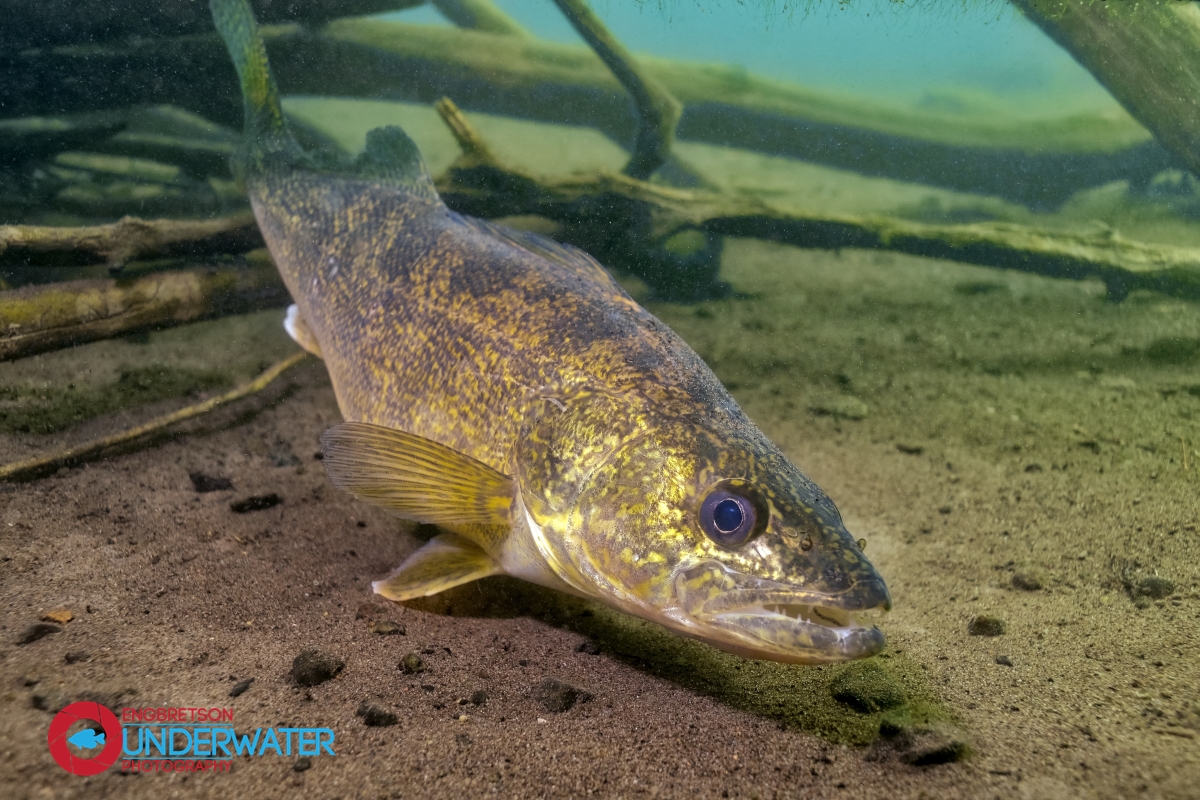
I'm often asked what the biggest challenge is to taking underwater fish pictures. Well, there are quite a few obstacles and many things that have to be right to be able to get a good picture. First, the water has to be clear, which is actually a greater challenge than you might think. Freshwater lakes are typically pretty crummy so finding lakes that have the necessary clarity is an ongoing process. I usually won't even look at a lake if the clarity isn't at least 18 feet. Water clarity can change from week to week and season to season too, so even though I have my favorite lakes, they’re not always clear enough to work in. Everything starts with water clarity and if you don’t have that, nothing else matters. It’s always a challenge to find clear water.
Once I find a clear lake, I have to find fish. Next I have to find fish of desirable size. This is easier said than done too. It's always a problem especially these days when it seems like there’s fewer and fewer really nice fish available. If I do find a lake that’s clear and it does have a few good fish, another challenge is getting close enough to photograph them. I like to be 2 or 3 feet away. Any further and I won’t take a picture at all. Fish often times have a problem with a diver being that close, so it takes a lot of patience to even get close enough to think about composing a picture. But once I have clear water, good fish, and get close enough to shoot them, I still have to make the shot. So even if everything else is right, sometimes I blow it all on the final step because I was moving, or the composition is bad or I forgot to turn on the strobe, etc.….
A lot goes wrong. Sometimes I feel like it’s truly a miracle to get any good pictures at all because so many things that I can’t control have to be right all at the same time.
Conditions underwater are typically very hostile to a photographer. The lakes and rivers where I shoot can be very cold. In rivers, currents can be strong, and visibility is always an issue. Underwater photography is inherently tricky. Water is 800 times thicker than air, and there's always particles floating around or algae and things like that, so you've never going to get the really "clean" look you can get shooting through air. The water is often cold, the fish can be elusive, and you've got to always be concerned about your air supply, so there's a lot to think about. The light underwater is very poor too, so often I have to carry underwater strobes to illuminate subjects in deeper water. If you can imagine taking photos on a dark, cold, foggy, windy day… that sort of comes close to the everyday conditions of the environment I work in. Saltwater environments are infinitely easier. The water’s 100 times clearer, there’s 100 times more light, and ocean fish are used to seeing very large things swimming around them. In freshwater, you look like Godzilla to those poor fish.
So, yes-the challenges are many, but as I always say, "If it was easy, everyone would be doing this".
Sunday, August 23, 2020
Summer Largemouth Bass-Where to Find Them

It's late summer and we're getting some really attractive Largemouth Bass images showing these fish using thick weed cover and a variety of other natural habitat elements.
At this time of year, we face several obstacles when photographing bass. They tend to be harder to find because they're occupying all areas of the water column and tend to be widely dispersed. Water clarity diminishes this time of year as well, making normally suitable lakes too murky or "green" for good photography. Finally, there's a seasonal shift in attitude of these fish by August. Bass that were very approachable in the spring have become more wary and timid by late summer, so getting closeups of them becomes more difficult.Despite all
those challenges, we're still able to get some fine images of them in
their natural habitat. Check out all our latest Largemouth Bass in our Largemouth Bass Gallery.
Saturday, June 20, 2020
What's the Easiest Fish to Photograph Underwater?
 |
| Smallmouth Bass Underwater (c)Eric Engbretson |
I received an email the other day from someone who asked me
what I thought was the easiest fish to photograph. Well, none of them are that
easy to photograph well, but if I had to pick one that gave me the least
trouble, it would be smallmouth bass. The reason for that is they have a unique
inherent curiosity and sociable nature. They’re not by nature a timid fish so
they'll eagerly come around you. I think they've learned that divers stir up
food items. They’ve kind of put that together. So when you get in the water,
you’ll get them following you around after a while. It’s not unusual at the end
of a dive to have 15 or 20 smallmouth bass in a parade, following you.
If a smaller one comes too close to you the larger ones will
chase them away so they can have exclusive access. Because they are so friendly
and easy to approach, you can blow all the bubbles you want to or spend crazy
amounts of time fooling around with different camera adjustments or lighting
angles without worrying about them being scared off.
So, what's the most difficult fish to photograph? I think it's the carp. They are so aware. They have excellent vision and hearing. They can see you so far
away in clear water and if you make any slight noise, they're gone. Even if you don’t blow a bubble
but you take a breath, it makes a tiny whooshing noise. It’s such a tiny sound,
but they hear that and they react. You have to be so still and so quiet.
What I
do with carp is I pick a spot where I know they’re milling about and I get behind
a rock and hide and hopefully one will cruise by. If they see you it’s over. They’re
really smart and are really sensitive to the bubbles of divers. That's why they give me so much trouble. But they're not the only species that are bothered by bubbles. Crappie, yellow perch, trout, catfish, sturgeon are some others. They’re all hard to get close enough to to get great pictures. To be successful, you need patience, and frankly a lot of times luck.
Sunday, January 19, 2020
Getting Close to Fish: How's That Done Exactly?

How Do You Get So Close to The Fish? Why Don't They Spook?
That's a question I get asked frequently by many people. To photograph fish well underwater, it's necessary to get very close to them. So how do I do that? One thing I've done is to develop a series of techniques that communicate to the fish my lack of hostility, and my general inability to compete with them as creatures perfectly designed for life underwater. One way I do that is to present myself as obviously as possible. I don't try to ambush or deceive them. I don't wear a camouflage wet suit. I don't sneak around or hide behind boulders or timber. I don't try to advance toward a fish when he can't see me. I don't even try to be particularly quiet.
In fact I do the opposite of all those things. I make sure the fish see me coming from a long way away. I try to show myself out in the open and demonstrate what my limitations are. Ideally, you want to convey to the fish how slow and incompetent you are in it's environment; how clumsy you are; how incredibly un-stealthy you are; This is so opposite of what a predator would do that many fish are able to detect that you're not a threat to them, based on your complete lack of cunning or covertness. You want them to see you and think that you're completely ridiculous (which you are of course). The faster you can get them to understand this, the faster their fear will disappear.
What I'm mainly trying to do with this approach is to begin a relationship with a specific fish or fishes that I expect to see many more times in the future. However, if you have one chance on one day with a fish you know you'll never see again, I'd recommend a more stealth approach.
Ordinarily though, I'm just trying to get fish used to seeing me. Over many visits to the same lake, the same fish will see me time and time again. Eventually, as bizarre and strange as my appearance may be to them, I won't be considered "an unknown scary thing" to avoid. Fish will come to regard me as that "big funny looking turtle-like thing" they sometimes encounter. Nothing to worry about. Once I can establish this kind of confidence level in the fish, they give me permission to approach closely to get the kind of pictures I want without causing them to flee.
As many who work regularly with wildlife will tell you, it's all about body language. It's the way animals communicate with each other and the only way for inter-species dialogue to occur. Learning how to eliminate unintentional signals of hostility or threats to animals is something we can learn to do and employ effectively in our encounters with them.
Monday, October 21, 2019
Mastering the Close-Up Fish Portrait: How It's Done

The number one mistake novice underwater photographers make is failing to get close enough to their subjects. Since freshwater fish are relatively small, you have to get extremely close to them for striking, frame-filling pictures. On the other hand, this isn’t as difficult as it may seem.
Once you see a fish, you need to make a quick assessment of its potential for your photographs. If it’s swimming away, let it go. Swimming after a fish is futile and results only in pictures of tails, not the stunning full-body portraits that you’re really trying to make. You’ll want instead to concentrate on fish that are not in motion. These are the easiest fish to photograph.
Once you see a fish nearby, the first thing to do is to freeze and let the fish come to you. If you remain motionless and quiet, many fish are curious enough to swim right up to you for further investigation. Any sudden movements will cause them to swim away quickly. Remain still and allow the fish to become accustomed to your presence. After a few minutes, if the fish doesn’t approach you further, and it doesn’t swim off, move in closer. Do this slowly and only a few inches at a time, pausing with each new advance.
Always try to approach fish mainly from the front. Let the fish see you. Because this approach is an unnatural tactic for a predator, the fish will more likely regard you as non-threatening if you behave like this in a slow and deliberate manner. As you move in closer and closer, stop to take a few pictures. Continue to move closer while carefully watching the fish. At some point, you will go beyond the fish’s zone of acceptable comfort. This is when the fish will retreat because you’ve gotten too close. But if you move slowly, studying the fish as you approach, you’ll see early signals from the fish that you’re getting too near. It may begin to get nervous, to turn, or move slowly away. This is where you stop. This is as close as you’re going to get to this particular fish at this time. This is where you take your close-up pictures.
If you’re doing it right, you should be only one to three feet away. Your pictures at this distance will be amazing, especially in very clear water on a bright sunny day! It’s important to keep in mind that fish vary from lake to lake and species to species. Don’t be disappointed if you don’t get near enough for that breath- taking close-up every time you shoot. There will be other opportunities. With time and patience, you’ll enhance your skills at this method. With experience, you’ll get within arm’s length of most fish most of the time.
If you have a question or comment about photographing fish in freshwater environments, you can contact me at eric@underwaterfishphotos.com
Friday, June 28, 2019
The Best Thing About Being An Underwater Photographer

What's it like to be a professional underwater photographer? It’s like every day is Saturday!
The early days were tough. I began taking pictures professionally
in 1993. I was disillusioned with my previous
occupation (radio broadcasting) and was looking for some kind of business where I could set my own hours and be my own boss. I had no training or education in photography
whatsoever and knew nothing about the business aspects of shooting, selling
and marketing stock images. But I had a
passion for my subject matter that made up for my lack of
experience and knowledge. I loved fish, and I just wanted to show
people images of common freshwater fish that perhaps they’d never seen
before. Seeing underwater Images of freshwater fish in their natural habitat
were almost as rare then as they continue to be today. I was motivated by three things: 1) I wanted to create a self-sustaining
income that would replace my regular 9-5 hamster wheel job, 2) I knew it had to
something that I enjoyed, had fun with, and would never regard as work, and 3)
I wanted to generate in others the same kind of awe and appreciation I had for
fish, and I thought that through photos I might be able to do that.
During those humble early years, it was difficult to even find a mentor. There
were many underwater photographers, but none who worked in freshwater with the
subjects I was interested in. One guy
who did a little of the kind of photography I wanted to do was Doug Stamm. He became a role model to me because of the way he was able to sell and market so many of his images to the same venues that I would
later work for. I remember going to the
magazine stand and counting the number of covers and inside pictures he was
selling in any given month and being astounded. One of my goals then was to generate an income I
could live from, so seeing what Doug was doing gave me hope that it
was indeed possible.
I’ve gotten so much help over the years. I can’t begin to tell you about all the different
individuals who have made it all possible.
From fisheries biologists who share information with me about lakes and
fish behavior to lake-front property owners who grant me access to their lakes
and suggest specific places to check out. There’s been family members who gave
me financial support in the early years that made it possible for me to spend
time shooting instead of “working”.
There’s literally been hundreds of people who certainly share a part in my success.
But not every association was useful. Because of the uniqueness of what I was doing, it was difficult to find a group of people to
relate to. I dive underwater to photograph fish, but I’ve found I have little in common with either photographers or divers. The photography people just
wanted to talk about cameras. The scuba diving people just wanted to talk about dive computers or dive vacations. Nobody wanted to talk about fish. I felt very alone until I began meeting professional fisheries biologists. Those were the friendships that were naturally harmonious. I'd finally found a group of people, who like me, could talk about fish all day long.
I'm often asked what advice I have for aspiring underwater photographers. I think today it's very difficult to make a living in this field. The
saltwater environments are really saturated with photographers, many of whom
have the world’s best locations in their back yards. It would be extremely difficult to compete
with them. They actually live in the
same places that others spend thousands of dollars and travel thousands of
miles to get to. How can you possibly
compete with someone who has access to places like that 51 weeks of the year
more than you do? Freshwater however, is a different situation altogether.
Freshwater material is an area nobody is covering, so there is no competition. On the down side, the demand for freshwater
images isn’t as great either. I’m hoping
to draw more awareness to freshwater environments so that more people will become aware of the importance of these ecosystems.
I think there’s always room for more good photographers, and
I think interest in underwater subjects will continue. I encourage beginners to learn about their
subjects. Become an expert on the life
and behavior of your animal subjects.
Become a steward of their habitat.
Think of yourself as a PR person for that particular animal. If you do this, you’ll show them in the best
light, you’ll be mindful of disturbing them, and your work will automatically
show these creatures at their most magnificent.
Don’t sell pictures. Instead,
fall in love with your subjects and sell
that love! And instead of exploiting
them for personal profit, you’ll become partners with them in calling attention
to their inherent beauty and value in the ecosystem, and the special problems
each one of them face in an increasingly crowded world. You
know, the freshwater world has never had an ambassador in the same way the
oceans had Jacques Cousteau. Perhaps,
all of us who spend time in lakes can collectively be some sort of equivalent
to that. At least that's my dream.
Speaking of dreams- I often refer to the small group of freshwater photographers that my stock photo agency represents as the “dream team”. I look for people who have a genuine
interest in freshwater subjects.
They’re not as glamorous and sexy as whales, dolphins and sharks, so
very few people are attracted to them. I
look for people who can competently take a picture and get it technically
right. And I look for people who
are going to be shooting freshwater with some regularity and frequency. Anybody can get a picture here or there, but
I want someone who’s going to be generating new material often. That essentially means someone who's spending a
whole lot of time in freshwater.
I see how miserable many people are at their
daily jobs, and I still remember what it was like to live that way. I’m thankful and appreciative for what I have
and the niche I’ve carved out. I guess
my only goals are to be able to get up tomorrow morning and do the same thing
all over again. For people lucky enough
to have a career that brings them genuine joy, it’s indescribable. You’d do it for free because you’re so
passionate about it. It’s like being on
vacation every day. When there’s no
distinction between work and play, you know you’re there. What more could anyone want?
Tuesday, March 26, 2019
How To Photograph Timid Fish Underwater

In freshwater environments, photographing timid fish can be
an exercise in frustration. After nearly 30 years of working with subjects
underwater, I’ve learned a couple of things that might help you get closer to
fish and get better images.
Since freshwater fish are relatively small, you have to get
extremely close to them for striking, frame-filling pictures. On the other
hand, this isn’t as difficult as it may seem. Once you see a fish, you need to
make a quick assessment of its potential for your photographs. If it’s swimming
away, let it go. Swimming after a fish is futile and results only in pictures
of tails, not the stunning full-body portraits that you’re really trying to
make. You’ll want instead to concentrate on fish that are not in motion. These
are the easiest fish to photograph. Once you see a fish nearby, the first thing
to do is to freeze and let the fish come to you. If you remain motionless and
quiet, many fish are curious enough to swim right up to you for further
investigation. Any sudden movements will cause them to swim away quickly.
Remain still and allow the fish to become accustomed to your
presence. After a few minutes, if the fish doesn’t approach you, and it doesn’t
swim off, move in closer. Do this slowly and only a few inches at a time,
pausing with each new advance. Always try to approach fish mainly from the
front. Let the fish see you. Because this approach is an unnatural tactic for a
predator, the fish will more likely regard you as non-threatening if you behave
like this in a slow and deliberate manner. As you move in closer and closer,
stop to take a few pictures. Continue to move closer while carefully watching
the fish. At some point, you will go beyond the fish’s zone of acceptable
comfort. This is when the fish will retreat because you’ve gotten too close.
But if you move slowly, studying the fish as you approach, you’ll see the early
signs from the fish that you’re getting too near. It may begin to get nervous, to
turn, or move slowly away. This is where you stop. This is as close as you’re
going to get to this particular fish at this time. This is where you take your
close-up pictures. If you’re doing it right, you should be only one to three
feet away. Your pictures at this distance will be amazing, especially in very
clear water on a bright sunny day!
It’s important to keep in mind that fish vary from lake to
lake and species to species. If fish in a particular lake refuse to let you
approach closely, go to another lake. There are just some places where fish don’t
see many divers, snorkelers or swimmers.
In waters like these, they tend to be more apprehensive. On other lakes,
where fish see people with more regularity, they’re less frightened by our presence.
One technique I often
employ is called the “swim by”. That’s where you make one pass near a group of
fish at a distance. Your objective here is simply to be seen. You swim by not
approaching them or barely even paying them any attention. This gives them an
opportunity to see and evaluate you.
Later you can return to this group. They’ll be less alarmed because they’ve
seen you before and their prior experience with you wasn’t regarded as hostile. The “swim by” helps to build some confidence
in timid fish.
Don’t be disappointed if you don’t get near enough for that
breath- taking close-up every time you shoot. There will be other
opportunities. With time and patience, you’ll enhance your skills at this
method. With experience, you’ll get within arm’s length of most fish most of
the time.
Sunday, January 27, 2019
Working with Fish Models

When photographing fish underwater, the trick is to get as close you can and shoot through as little water as possible. In freshwater environments, even the clearest water has a lot of suspended material in it that will degrade picture fidelity, so getting close is paramount. This smallmouth bass was only a foot away from a camera equipped with a wide angle lens. The wider lenses are necessary so that the entire fish and some of the scene can be included in the frame. Some fill-flash from strobe lighting is added to bring out the color and fill in shadowy areas. Even on bright sunny days, ambient light underwater quickly degrades after only a few feet under the surface so supplemental lighting is always helpful.
Smallmouth bass make excellent subjects because they tend to be very friendly and curious fish and will easily approach a diver with a camera. This is an older fish that I've worked with before as a photo model. He (or she) has somewhat of a back hump which makes him (or her) easily recognizable. I photographed this fish against a background of northern watermilfoil. Anytime you're able to include a nice background like this curtain of plants, it helps make the picture more interesting and gives the viewer a sense of the underwater habitat where these fish live.
I'm sometimes able to enlist the the same fish as a model if I've been able to establish a relationship with them. This can occur only after many repeated encounters and a certain level of comfort develops. While fish may never understand what we are, they know we’re not the otters they see who move with great speed and agility and should be feared. We’re probably regarded more like the way they view snapping turtles. We're large, plodding creatures with no real underwater skills who aren’t a threat unless we get very close.
Over time, the fish begin to notice that as we clumsily move through the water, we create a disturbance. Unseen insects and other invertebrates that are hiding on plants or on the lake floor may be exposed or displaced and to the fish, they magically appear for them to eat. Maybe a crayfish is suddenly seen fleeing and again a food item is summoned out of nowhere. They may begin to view us as sorcerers who can conjure up food items by our mere presence. If they arrive at this conclusion, the entire dynamic between fish and us changes. We become viewed as a waiter or sorts. Instead of fearing us, we instead become something that should be paid attention to and even followed around so they’re able to snap up any treats that we may cause to appear.
Friday, June 29, 2018
The Biodiversity of Florida's Springs

Our Isaac Szabo, continues to amaze us with more stunningly beautiful pictures he's taken from the clear spring-fed rivers of Florida. The biodiversity of Florida's springs is astounding. Not only has Isaac captured many freshwater species like gar and brown bullhead, but he's also masterfully photographed many coastal species that are generally regarded as marine fish, such as Tarpon and Snook. We're pleased to add all of Isaac's new images to our online collection. He is a superbly talented underwater photographer and we're excited to continue representing his work at this agency. You can view all of Isaac's latest underwater work, including new images from Florida Springs in our Isaac Szabo gallery here.

Thursday, March 22, 2018
Florida Springs
Our Isaac Szabo, has been busy this spring photographing a variety of fish that make their homes in the springs of Florida. The clear water here helps to contribute to some truly stellar underwater images, like this spotted sunfish pictured below. You can view all of Isaac's latest underwater work, including new images from Florida Springs in our Isaac Szabo gallery here.

Thursday, March 15, 2018
Wanted: Fish Photographers
Engbretson Underwater Photography is always on the look out
for new photographers to join our team. If you take underwater pictures of North
American Native Fish, we’d like to talk to you about representing your work.

While all serious freshwater photographers are welcome, we’re especially interested in photographers who can regularly provide great underwater images of Channel Catfish and Flathead Catfish.
If you’re interested in joining our team, please contact us for more information. We’re excited to see your work.
Thursday, January 4, 2018
Do Fish Have Individual Personalities?
 |
| Largemouth Bass (c)Engbretson Underwater Photography |
I'm often asked this question and I have some definite thoughts about it. I’ve been photographing fish underwater in their natural habitat for over 25
years. In that time, there are long
stretches when I’ve worked with the same individual
fish for years at a time. Because of that, I think I’m
uniquely qualified to comment on whether they have individual personalities or
not. The answer to this is unequivocally
yes.
Just like the personality distinctions one could make between say poodles and collies, distinctions between different types of fish certainly exist. And not only do entire species like northern pike, largemouth bass or
bluegills have their own group personalities, but individual fish in the group have theirs
too. The individual fish and their unique personalities have as much depth and richness as the personalities of our pets. Sometimes I want to assign all the
fish of one species with a label. At
first, I’ll think something like, “You know, Black Crappies seem to be a little
aloof”. But then I’ll remember one or
two that I’ve met that weren’t and it makes me reluctant to paint the whole
species with a broad brush.
If you're skeptical of the idea that fish have personalities, I would say that you have to get to know them to understand
that. Very few humans have forged
anything resembling a relationship with a fish.
Certainly, few people have connections with wild fish. When you spend the enormous amounts of time I
have with fish, secrets like this reveal themselves to you.
So what are some of the different personality characteristics of fish? Here are a few common species and the traits I think they demonstrate, based on decades of underwater interaction with them:
Largemouth Bass: Clever; Focused; Innovative
Smallmouth Bass: Curious; Enthusiastic; Assertive;
Walleye: Stoic; Contemplative; Organized;
Musky: Uninhibited; Clumsy; Suspicious;
Northern Pike: Timid; Patient; Obsessive;
Bluegill: Friendly; Daring; Active;
Carp: Alert; Decisive; Anxious
Thursday, July 13, 2017
Northern Pike Underwater Photos
Our Paul Vecsei has been busy shooting some beautiful new pictures of Northern Pike. As Paul describes it, "The key (to photographing pike underwater) is what I call the polite pursuit, where an individual is chosen and followed. If the Pike wants nothing to do with me, it can lose me in a second. But some just keep a short distance and eventually allow me to approach. Once the camera with its large dome port is put close enough, I have him. They become mesmerized by their own reflection."
To view all our northern pike images, click on this gallery. To view all of Paul Vecsei's stunning work, click on this gallery.

To view all our northern pike images, click on this gallery. To view all of Paul Vecsei's stunning work, click on this gallery.
Thursday, June 22, 2017
Why Underwater Fish Photos Are Important

"As threats to freshwater ecosystems continue to grow, the vast majority of their inhabitants remain “out of sight, and largely out of mind”. This lack of public awareness of freshwater life may ultimately limit freshwater conservation as a popular cause, or movement. By its nature, aquatic life is inherently less visible to human eyes, and so images, such as photographs, play a critical role in visually connecting freshwater ecosystems to their would-be stewards. And while images by no means replicate human experiences in the natural world, they are a remarkably effective surrogate to enlighten audiences about natural ecosystems and their values. A passing glance at a magazine rack, television programming, and popular internet websites reveals a narrow view of freshwater life. In these popular sources of public information and entertainment, the vast majority of freshwater species are simply unseen, and therefore unknown to most people. A closer examination of the common images of freshwater life reveals an issue that is perhaps more problematic than mere obscurity. Almost invariably, popular images portray sportfishes and most other freshwater species after they have been “landed” or otherwise extracted from their aquatic habitat. In these images, aquatic organisms are far removed from their natural environment and behavior, which precludes an aquatic, and perhaps empathetic, perspective of their lives and their world. Moreover, these struggling or dead organisms are commonly seen “at the hands” of both anglers, and biologists, portraying a conquering image. Though rarely seen in popular media, underwater images of fish and other freshwater life in their aquatic habitat can more naturally convey the intrinsic and ecological value of these organisms, as well as their evolutionary, and even spiritual aesthetics. These images celebrate the aquatic world by depicting the natural beauty and behavior of freshwater life, the splendor and uniqueness of freshwater environments, and the intricate relationships among species and their habitats. In their natural medium, free of human hands or devices, organisms appear independent of humankind, and their intrinsic value is therefore made more obvious. Indeed, the vision of an organism behaving naturally and relating to its natural environment is precisely what can allow us to sympathize or even empathize with other species and appreciate their significance in our own world or worldview. It is these ecological, evolutionary, and spiritual aesthetics that will presumably resonate more deeply with the broader public, and are most likely to drive conservation movements."
Nice work Jeremy. Thank you for putting into words what keeps me doing this.
Wednesday, March 22, 2017
The Secret Life of Walleyes
I think every fisherman and anyone who spends time on the water wonders what it looks like beneath the surface of our lakes. Frankly, many waters are too murky to see well in, and that kind of defeats the purpose of underwater filming. In our underwater videos, we concentrate only on lakes with outstanding visibility. What good is underwater footage if you can’t see the fish clearly, right? In our films, you’ll see well-lit underwater scenes, in sharp focus and in stunning high definition clarity. The underwater world of our lakes and rivers are magnificent places and we wouldn’t be doing them or the fish justice if you we didn’t show them at their best. (Make sure to adjust your YouTube setting to HD 1080 for best results.)
Sunday, March 19, 2017
New Underwater Paddlefish Images
 |
| Paddlefish (c)Jennifer Idol/Engbretson Underwater Photo |
Tuesday, November 29, 2016
The First Woman to Dive All 50 States Is Now Shooting For Us!
 |
| photo by Aaron Bates |
Jennifer travels the country and takes outstanding fish photos in lakes and rivers across the USA. You can view her underwater images in our new Jennifer Idol gallery here. Her images are now available for commercial and editorial licensing from Engbretson Underwater Photography.
Saturday, July 23, 2016
New! Rare Images of Arctic Char Underwater
Just added to our stock collection are some brand new and amazing pictures of Arctic Char from our top-gun, Paul Vecsei. Paul has just returned from an epic journey to the icy streams of the arctic circle to beautifully photograph these gorgeous fish in their natural habitat. No other freshwater fish is found as far north. See all of Paul Vecsei's fantastic fish photography in our Paul Vecsei gallery on this site.

Subscribe to:
Posts (Atom)

 Posts


