Engbretson Underwater Photography

Search The Fish Photos


News From Behind the Scenes at Engbretson Underwater Photo and Stories about the Freshwater Environments We Visit.


Showing posts with label Walleye. Show all posts

Saturday, April 30, 2022

Photographing Walleyes in Their Natural Habitat


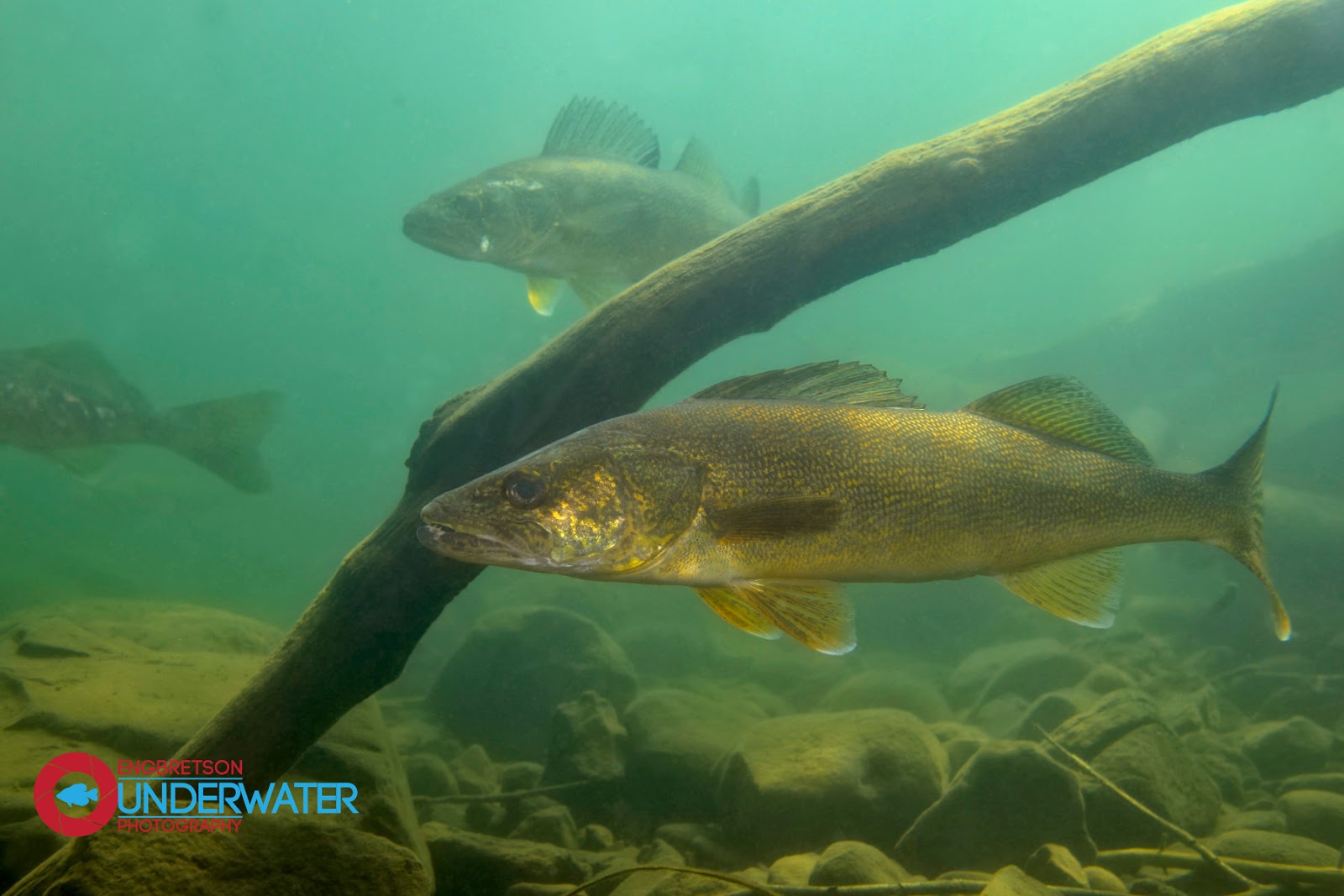
It's been my experience that photographing walleyes underwater in their natural habitat can be either ridiculously easy or extremely difficult.  I'm convinced that there's a lot of luck involved.  As most fishermen can attest to, even finding walleyes in a lake can be a tough assignment.  Some fish are especially sensitive to air bubbles from divers, and walleyes are one of these species that seem troubled by the unusual sound.  They will usually move away quickly when they hear the sounds of a diver's air bubbles streaming to the surface.   Other times, I've found walleye to be completely at ease with my approach, my bubbles, and my general presence.  At these times I'm able to easily take close-up pictures with my cameras just inches from the fish.  I've spent a great deal of time analyzing the various factors and conditions that sometimes make photographing walleye easy and sometimes make it impossible.

After 27 years of encountering walleye underwater, I still don't have a definitive answer.   One theory I have is that if the fish feels secure, a close approach is possible.  If there are predators nearby, a lot of recreational watercraft traffic, or any other kind of perceived threat or disturbance, they will be anxious, nervous, and "edgy".  When the lake is quiet and they feel secure near a piece of cover, they seem to be more relaxed and at ease.  I think it all has to do with a sense of safety.  Fishermen believe walleyes always prefer deep water and avoid light because of their sensitive eyes.  I don't think that's necessarily true, or the real reason why walleye seem to seek out deeper, darker water.  On some of the quieter lakes I visit, they can be found in very shallow, brightly sunlit water close to shore.  On busier lakes, they almost always seem to be in the deeper stretches.  It could be that the perceived threat to their safety has more to do with locations walleyes are found than depth or brightness of the sun.

I work with many fishing magazines and exceptional walleye images are seemingly always in demand.  Consequently, I've spent a great deal of time learning about walleyes and their behavior to gain a better understanding of how to best find and approach them to take their pictures. Certainly, being in the water with the fish gives you a glimpse of their "real" behavior-a snapshot few people ever see.  Correctly interpreting what you observe is another matter and is the beginning of understanding and wisdom.

Like all animals, walleyes have many secrets and as we begin to learn more about their endlessly fascinating lives, we'll be able to appreciate them more and more for their inherent beauty and magnificence.  I know I do. 

Thursday, June 24, 2021

How Bio-Manipulation Saved the Walleyes of Wisconsin's Lake Metonga

My underwater images and my article about Lake Metonga's walleye recovery is the cover story of the July/August issue of Badger Sportsman Magazine.

I was in contact with Mike Pruel today to see how things are going this year on Lake Metonga. "Unfortunately, the bullheads have risen again, so we will do our best to knock them back in next few years", reports Pruel. Mike's crew has removed an additional 12,000 bullheads in the spring of 2021. "We're working closely with the Lake Metonga Association to organize and support efforts to remove baby bullheads this year and beyond. This is their part in the project, and a key for long-term management of bullheads in Metonga."

Despite the recent uptick in bullhead numbers, walleye recruitment remains robust. Spring walleye surveys continue to show young walleyes from the previous years are thriving and growing quickly, indicating that the walleye population is in great shape.

Wednesday, May 19, 2021

The Pros and Cons of Early Season Scuba Diving


The 2021 season is underway. Water temperatures finally broke the 60-degree mark here in northern Wisconsin, which moved fish out of deep water and into the shallows for spawning.  At this time of year, I don't see many panfish, but the muskies are in the littoral zone completing their spawning rituals. I'm focusing on them now and getting some excellent pictures of post-spawn fish. In the next few weeks, I'll be switching my attention to the bass and crappie that will be spawning next and providing some excellent photo opportunities. Bluegills and pumpkinseed will be the last to spawn, with many bluegills still on nests well into July.

At this time of year, water clarity varies widely. Some lakes have excellent clarity very early in the year that degrades very quickly and never clears up. Other lakes are murky in spring and gradually clear up by mid-summer. Quickly rising temperatures also cause the water to stratify. A barrier can be formed that's difficult to see through. As long as you're looking straight ahead in a horizontal column of water that's the same temperature, you can see well. However, if you look up or down, even a few feet, you won't be able to see far because of this thermal barrier. This can make finding fish difficult. Once the water temperature warms enough, this layer will fall dramatically and form the thermocline, which is typically 20-30 feet deep.

One of the best things about diving Wisconsin's lakes in May is that boat traffic is still very limited. Kids are still in school, summer visitors haven't arrived and many cottages have yet to open for the year. This usually means that during the week, I have the lakes all to myself. After Memorial Day, things get busier. The increased boating traffic always drives the fish away from the shallows to deeper stretches where they're not as easy to find and photograph. Right now, even walleyes are in untypically shallow water and I've seen a few of them near shoreline cover in less than 10 feet of water.  

If you've always wanted to see our native fish in their natural habitat, pick up a snorkel and some swim fins and jump into the closest lake near you. You'll be surprised what you can see this time of year. 

Sunday, April 12, 2020

Walleye 911: The Walleye & Bullhead Connection


Juvenile Walleyes in Lake Metonga (C)Engbretson Underwater Photo

by Eric Engbretson

Something was going very wrong in Lake Metonga. The 2,000-acre lake in Wisconsin’s north woods had been a successful walleye lake for decades, but by the late 1990s, natural reproduction and walleye recruitment had slowed to a trickle. To make matters worse, by 2004, the adult walleye population had sharply declined.  Spawning habitat was excellent, but young fish, either stocked or natural, were not surviving to adulthood.
 
Mike Preul, fisheries biologist for the Mole Lake Sokaogon Chippewa Community has been involved with fisheries work on Lake Metonga for twenty years.  He took a closer look at the lake to see what changes might explain why walleyes were suddenly having such a rough time. 

The fish community in Lake Metonga had always included black bullheads, but now fishermen were telling Mike how often they were catching the small catfish. “We were doing some routine electro shocking one day and when the stunned fish floated to the surface, all you could see were yellow bellies. That’s when I knew there was a problem”. The abundance of bullheads had become enormous. “We did some simple math and calculated what a bullhead eats in a year. They were taking up a lot of space in the system and stressing the available forage for walleye.”  The theory was they were outcompeting walleyes for important forage at critical times when walleyes need an abundance of specific-sized food.  “We knew stocking wasn’t working, so the idea was that if we could create a kind of void, the walleyes might rush in to fill it.”

Like many fisheries managers, Mike’s resources were limited, and he privately wondered if this was really a battle he could win. His plan was to create conditions where walleyes could thrive, and that meant doing something about how much of the lake’s biomass was tied up in bullheads.  His plan reversed the fortunes of the lake’s walleyes almost overnight. 

In the spring of 2008, Mike began the first of what would become an annual bullhead removal on Lake Metonga. The work was labor-intensive. “At first we set fyke nets, but the fish weren’t moving into them in sufficient numbers, so the decision was made to electroshock for bullheads”.  Mike’s crew worked until their arms ached, shocking and netting the whiskered fish out of the lake. By summer’s end, they had removed 13,337 pounds of bullheads. All the fish were donated to the public, to food banks and to nearby wildlife rehabilitation centers for the feeding of raptors. 

Into the newly created void, Mike stocked 5,000 large fingerling walleye.  The next spring, another 6,216 pounds of bullheads were removed and over two million walleye fry were stocked. But this time, something different happened.  Substantial numbers of young walleyes survived from the two years of stocking and began to show up and be counted in fall recruitment surveys. 

At first there seemed to be no end to the steady stream of stunned bullheads that rose to the surface every time Mike’s crew flipped on the electrodes of his shocking boat. But gradually, fewer and fewer bullheads appeared, and it took longer to fill up the tubs on the boat with fish. This process became a ritual every spring on Lake Metonga and by 2012 the total catch rate had dropped by 87%.  During the same time, the abundance of walleye fingerlings was steadily increasing.

During 2011 there was a large year class consisting of purely naturally reproduced fish. With the resurgence of naturally reproduced walleye, stocking was no longer needed after 2012. With bullhead numbers reduced and in better balance with other fish, walleye production in Lake Metonga boomed. Eventually, both natural recruitment and adult walleye density reached historic highs. For Mike Preul, this felt like the kind of victory that fisheries managers too rarely experience.  “I won’t lie to you, it was a lot of hard work some days, but the results have been so amazing.”


Today Mike Preul spends only a few days each spring shocking for bullheads. It’s become pure maintenance now, like mowing his lawn. “As long as they don’t get out of control, I think we’re good”, smiles Mike.  Walleye production has it’s up and down years but has remained reliable overall.  What Mike learned on Lake Metonga could fill a book. His bio-manipulation method of removing bullheads to rebuild embattled walleye populations was successfully employed on Patten Lake in nearby Florence County and worked like pure magic. When that lake’s over-abundant population of bullheads were severely reduced, the walleyes quickly came back in record-setting density.

Keeping walleye lakes healthy and productive is an ongoing issue, and all lakes face their own unique challenges. Overall, there likely aren’t a great number of walleye lakes affected by bullhead populations, but where such lakes exist, Mike Preul’s pioneering work is one silver bullet that fisheries managers can now add to their arsenal. 

(For further information, questions or comments about his work, Mike Preul can be contacted at mike.preul@scc-nsn.gov)

Saturday, August 24, 2019

Where to Find Walleyes-Secret Locations That Are Often Overlooked

Often times when I'm coming off the lake and loading my scuba diving equipment and cameras into the car, fisherman will approach me at the boat landings to ask "Did you see any fish?"  Or, "Where are all the big ones?"  Since I'm actually under the water swimming with the fish, I do notice some things that escape most fisherman.  So in answer to the question, "Where are the fish?" I've compiled a list of the five most surprising areas where I regularly encounter walleyes that few fisherman pay any attention to. How many of these locations do you completely ignore when targeting walleyes?

1) Shallow Water. Since I'm trying to photograph fish, I tend to concentrate on areas where the light is the best.  This often means depths of 12 feet or less.  This shallow water is where I take 90% of my walleye pictures.  It's surprising how many fish can be found close to shore in water that's barely over your head.  If there are large submerged trees close to shore, I almost always find walleyes there.  Most walleye fisherman ignore shallow water, but I can tell you that the fish are there.

2) Under boat docks.  Not all boat docks have walleyes under them, but the ones that share certain characteristics will hold walleyes most of the year.  Nobody seems to fish for walleyes around shallow boat docks, but if you can find ones that have a hard or gravel substrate, extensive areas of shade, and deep water nearby, you'll find walleyes there.

3) Eurasian Watermilfoil.  This invasive plant is almost universally regarded as bad, but fish love milfoil.  If I'm on a lake where EWM is present, I head right for it. It's a fish magnet for all species including walleye.  Sometimes I'll find walleye cruising along the deep edge of milfoil colonies, but usually they're buried inside the thickest and most dense parts of milfoil beds.  It's hard to photograph walleyes in cover this thick and just as difficult to fish for them in these areas, but they're always there.

4) Fish Cribs.  Everyone knows that there are fish around fish cribs, but they aren't as famously known to be places to find walleyes.  The walleyes I see around cribs fall into two categories. Inactive fish are typically underneath the cribs, or buried deep inside them in thick brush.  Active fish cruise cribs in a radius that can extend up to 20 feet.  While it's easy for me to photograph them here, catching them here is harder because there's often an abundance of bass or panfish around that are higher in the water column that will strike the baits or lures before the walleyes get a chance to.  In the presence of other fish, walleyes are timid and won't fight a rock bass or smallmouth to get to a bait first.

5) Sunny days.  The last location where I always find walleyes isn't a location at all, but a condition.  Walleyes have a reputation for avoiding bright sunshine, or going deep on sunny days.  When I'm photographing fish, I relish bright sunny days with calm surface conditions and I'm usually in the water around high noon when the light penetration into the water is the best.  You might think these would be terrible conditions for walleye fishing, but I can tell you I encounter plenty of large walleyes actively feeding during these times... often in shallower water.  If you're a walleye fisherman and as a rule, avoid fishing during the midday hours or on bright sunny days, you're missing out on good opportunities to encounter fish.

For over twenty years I've been photographing walleyes underwater and those are some of my go-to places.  They're certainly overlooked locations and might even seem counter intuitive to most walleye fisherman, but I wouldn't be wasting my own time with them if they weren't highly productive.

(To view our walleye image gallery, click here.)
(For more on walleye behavior click here.)

Tuesday, October 9, 2018

Do Muskies Eat Walleyes?


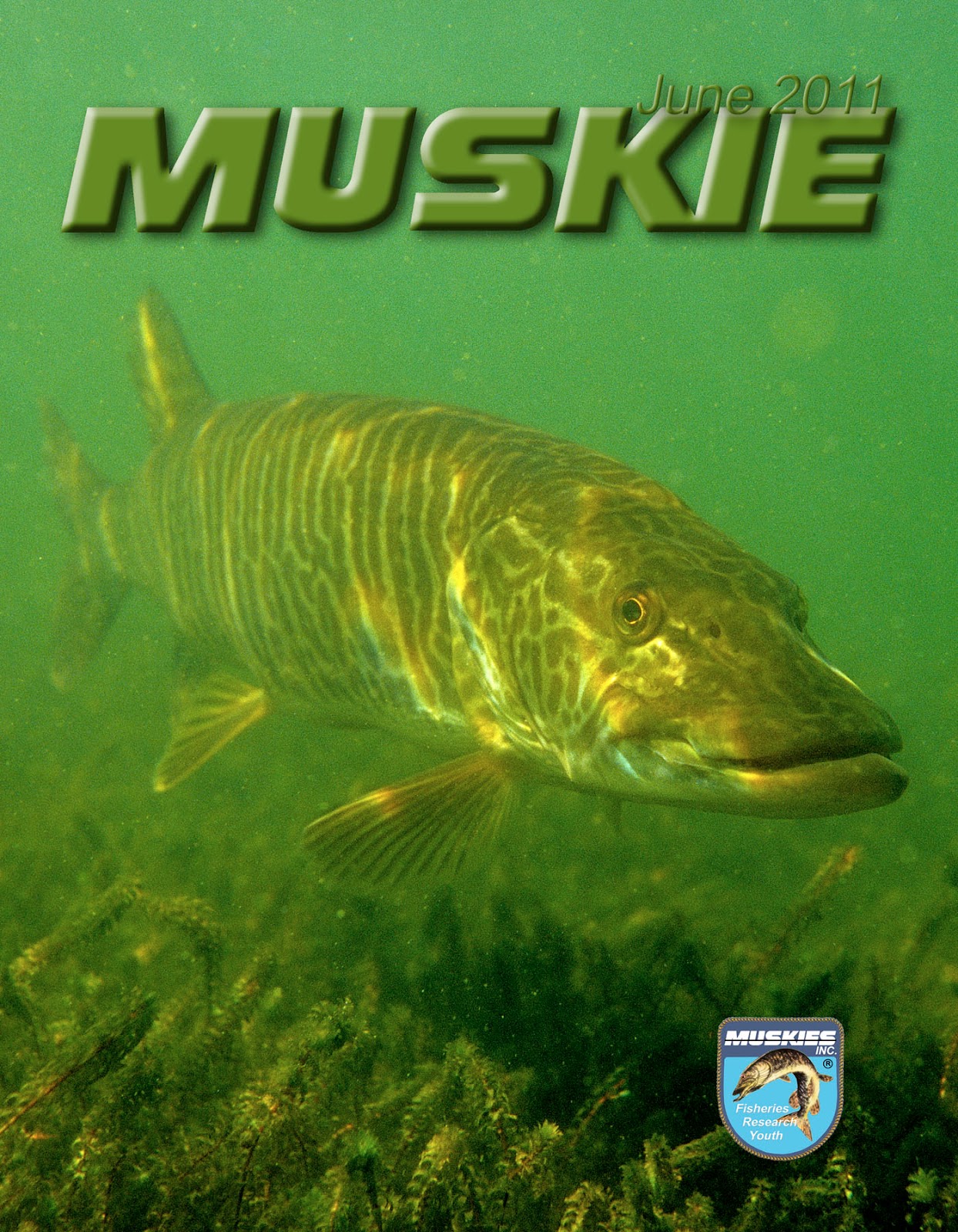
In June 2007, Muskie Magazine published an article I wrote about my underwater observations photographing muskie.  In the last paragraph of that article I shared some conclusions I had made regarding muskie preying on walleye.  I said at the time that I believe muskie routinely prey on walleye and cited many of my own observations that led me to believe that.
 
In the last ten years, I’ve witnessed additional muskie behavior underwater and while humbling, I think it’s only fair that I set the record straight and tell you why I now believe I was wrong about my original conclusions.  
 
Here are the facts:
 
I have never once seen a muskie actually capture a walleye.  Certainly, when walleyes are around, a muskie will show interest as they do in all fish they encounter that might be regarded as potential prey.  I often saw muskies following walleyes-a term I called ‘stalking” or “targeting”.  On occasion, I had seen muskies “rush” a walleye in what could only be considered an attack.  The muskies were always unsuccessful.  The conclusion I made from these observations is that while I saw only misses, they must be successful most of the time when targeting walleye.  I now think that I completely misinterpreted those observations.  
 
Today, ten years after I wrote the article, I have a different idea of what I really saw.  I’ve had almost a decade more to observe many more muskies interact with other fish and I feel I’ve learned a great deal.  I’ve now seen a great many “misses” and still not a single successful capture. Today, I’m convinced that muskies actually eat very few walleyes.  The reason for this will seem counter intuitive to everything you know about muskie, but it’s a conclusion that seems well supported.  I don’t believe muskie are very efficient predators… at least not of walleyes.  In reviewing my underwater video of muskie attempting to prey on walleye, they fail time and time again because of many huge disadvantages they have.  Walleyes on the other hand, seem to be uniquely designed for the purpose of evading muskie.  Walleyes have excellent vision and are always keenly aware of the location of any nearby muskie.  It’s nearly impossible for a muskie to actually “sneak up” on a walleye.  My videos show that walleyes are speedy and agile and they escape with very little effort at all.  Muskie, it has to be said, are rather clumsy.  They have some speed but only for very short bursts.  Their long bodies are difficult to turn and they lack the mobility to out maneuver walleyes.  They have good vision that they use to their advantage in low light when preying on perch or suckers, but it’s no match against a walleye’s vision.  The videos that I’ve taken underwater show how positively feeble and overmatched muskie are when attempting to chase down a walleye.  In short, walleyes seem specifically designed by nature to possess the exact traits needed to evade muskie.  
 
It’s not surprising that walleye fisherman sometimes have muskie attack their catch as they’re reeling it in.  Only a walleye already hooked and struggling on a line would be incapable of escaping a muskie attack.  When this occurs, it’s easy to assume that muskie must eat walleye all the time.  I came to the same false conclusion myself.  But now I think only walleyes that are compromised ever become prey for muskie.
 
For people who appreciate or even revere the muskie, it almost seems blasphemous to suggest that muskies have any shortcomings whatsoever, but I think they do.  I now believe that muskies don’t eat many walleyes, not because they wouldn’t want to, but because they’re unable to.  At last, the mighty muskie has met his match and it’s the wily walleye.

Thursday, August 3, 2017

The Wonderful World of Walleyes: Underwater Video


We’re getting some great walleye video in 2017.  Here’s a compilation of some of the remarkable underwater footage we’ve collected so far this summer.  Straight from the depths of Wisconsin’s northern lakes, see crystal-clear underwater video in HD of walleyes where they live.  Abundant crayfish, rock piles, sunken timber, and other habitat elements attract walleyes like magic as they pose for our cameras in their watery homes.  Thirty seconds of walleyes up close in incredible clarity and awesome fidelity.

Wednesday, March 22, 2017

The Secret Life of Walleyes

Jacques Cousteau once said, “The best way to observe a fish is to become a fish”. So, to better understand walleyes, we went beneath the surface to see them where they live, and filmed hours of high quality, HD underwater video of walleyes in their natural habitat. This compilation clip takes you beneath the surface to see big walleyes in their world, relaxed and at home.

I think every fisherman and anyone who spends time on the water wonders what it looks like beneath the surface of our lakes. Frankly, many waters are too murky to see well in, and that kind of defeats the purpose of underwater filming. In our underwater videos, we concentrate only on lakes with outstanding visibility. What good is underwater footage if you can’t see the fish clearly, right? In our films, you’ll see well-lit underwater scenes, in sharp focus and in stunning high definition clarity. The underwater world of our lakes and rivers are magnificent places and we wouldn’t be doing them or the fish justice if you we didn’t show them at their best. (Make sure to adjust your YouTube setting to HD 1080 for best results.)
 

Thursday, February 4, 2016

Amazing Underwater Escapes


I've just put together another video clip.  In this one you'll see how large bass and walleye try to prey on crayfish and how they escape to live another day.  See the strategies they employ to evade capture.

Saturday, December 5, 2015

Walleyes Underwater

I've been experimenting with shooting underwater video this year.  Here's a clip of some walleyes from a northern Wisconsin Lake.

Friday, October 23, 2015

Looking for a 2016 Walleye Calendar?


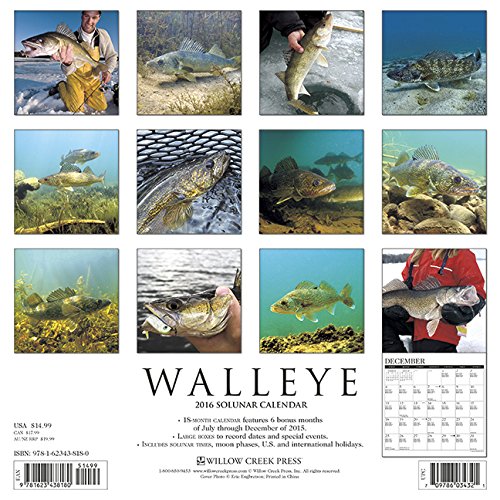
If you're looking for a cool 2016 wall calendar, check out the  2016 Walleye Calendar from Willow Creek Press.  It's widely available at many retail outlets including Amazon.com.  Seven of our underwater walleye images were used for this calendar. (These are some of our older images.  The awesome new walleye pictures we took this summer will appear in the 2017 version of this calendar.)


Thursday, April 2, 2015

Twenty Years of Underwater Observations: What's Changed?


2015 will mark my agency’s 23rd year of photographing freshwater fish, underwater in the wild.  As I thought about that, I began to reflect on two trends I’ve noticed over the past two decades, especially in lakes in Wisconsin and Northern Michigan where I live.  A few things stand out regarding fish sizes and abundance and general lake quality. 
Water Clarity:

As an underwater photographer, water clarity is critically important for getting good images.  Because of that, we make it our business to know where the clearest waters are.  One disturbing trend over the past 20 years is that we seem to be losing many of our historically clear lakes in Wisconsin.  More than a dozen lakes that were once very clear are no longer suitable for underwater photography because they simply are no longer clear enough.  Whether it’s because of run off, phosphorus overload or natural eutrophication is unknown.  But since these dramatic changes have occurred over such a short period of time, it suggests that the causes are not natural and are probably indications of damage we as lake users are facilitating.  On the other hand, there are also lakes that were once turbid or had poor water clarity that are now excellent.  The bad news is that virtually every lake that has significantly improved water clarity, it’s because of the presence of zebra mussels.  That may be a nice byproduct for snorkelers and divers, but the expansion of invasive species may also cause long-term negative consequences that aren’t as desirable as clearer water.

Changes in Fish Size and Abundance:

In Wisconsin’s inland lakes I’ve noticed some real changes in the last twenty years in fish abundance and sizes. In the interest of brevity, rather than detail and discuss each one at length here, I’ve decided to instead post a chart of what my personal observations have been over the past two decades. 

Table 1 Change in abundance and average size of Wisconsin fish species I've observed: 1993-2014
SPECIES
ABUNDANCE
AVERAGE SIZE
Muskie
Unchanged
Unchanged
Northern Pike
Decreased
Decreased
Walleye
Increased
Increased
Largemouth Bass
Increased
Decreased
Smallmouth Bass
Increased
Increased
Yellow Perch
Decreased
Decreased
Bluegill
Unchanged
Decreased
Black Crappie
Unchanged
Decreased
Rock Bass
Decreased
Decreased

It’s interesting to note that many of my personal and subjective observations regarding fish abundance and size structure mirrors what Wisconsin DNR fish biologists have also found over this same time period.  Walleyes and Smallmouth Bass are doing better these days but panfish in general are probably being overexploited in many areas, especially what fish managers consider to be quality fish.  (The Wisconsin DNR is in the early stages now of implementing new panfish regulations that hopefully will reverse a 70 year long trend of ever- increasingly smaller fish.)
 
The Future:
 
So what does these mean for us?  For someone like me who’s trying to photograph large gamefish underwater or fisherman who like to catch them, it means that in many cases, there are fewer trophy fish swimming in Wisconsin waters than there used to be.  Today, for me, it’s easier than ever to encounter and photograph nice-sized smallmouth and walleyes, but it’s getting harder and harder to find larger pike and quality sized panfish.  The future isn’t necessarily a bleak one however.  It’s my hope that we can turn this around.  Today, with camera phones being ubiquitous and replica mounts being both stunning and affordable, there’s little reason not to release not just the trophies but ALL the larger fish we catch.  If these same trends continue for the next twenty years, as fishermen, we’ll have no one to blame but ourselves.

Tuesday, November 11, 2014

5 Walleye Hotspots That Nobody Fishes (Inside Tips from an Underwater Photographer)

Often times when I'm coming off the lake and loading my scuba diving equipment and cameras into the car, fisherman will approach me at the boat landings to ask "Did you see any fish?"  Or, "Where are all the big ones?"  Since I'm actually under the water swimming with the fish, I do notice some things that escape most fisherman.  So in answer to the question, "Where are the fish?" I've compiled a list of the five most surprising areas where I regularly encounter walleyes that few fisherman pay any attention to. How many of these locations do you completely ignore when targeting walleyes?

1) Shallow Water. Since I'm trying to photograph fish, I tend to concentrate on areas where the light is the best.  This often means depths of 8 feet or less.  This shallow water is where I take 90% of my walleye pictures.  It's surprising how many fish can be found close to shore in water that's barely over your head.  If there are large submerged trees close to shore, I almost always find walleyes there.  Most walleye fisherman ignore shallow water, but I can tell you that the fish are there.

2) Under boat docks.  Not all boat docks have walleyes under them, but the ones that share certain characteristics will hold walleyes most of the year.  Nobody seems to fish for walleyes around shallow boat docks, but if you can find ones that have a hard or gravel substrate, extensive areas of shade, and deep water nearby, you'll find walleyes there.

3) Eurasian Watermilfoil.  This invasive plant is almost universally regarded as bad, but fish love milfoil.  If I'm on a lake where EWM is present, I head right for it. It's a fish magnet for all species including walleye.  Sometimes I'll find walleye cruising along the deep edge of milfoil colonies, but usually they're buried inside the thickest and most dense parts of milfoil beds.  It's hard to photograph walleyes in cover this thick and just as difficult to fish for them in these areas, but they're always there.

4) Fish Cribs.  Everyone knows that there are fish around fish cribs, but they aren't as famously known to be places to find walleyes.  The walleyes I see around cribs fall into two categories. Inactive fish are typically underneath the cribs, or buried deep inside them in thick brush.  Active fish cruise cribs in a radius that can extend up to 20 feet.  While it's easy for me to photograph them here, catching them here is harder because there's often an abundance of bass or panfish around that are higher in the water column that will strike the baits or lures before the walleyes get a chance to.  In the presence of other fish, walleyes are timid and won't fight a rock bass or smallmouth to get to a bait first.

5) Sunny days.  The last location where I always find walleyes isn't a location at all, but a conditionWalleyes have a reputation for avoiding bright sunshine, or going deep on sunny days.  When I'm photographing fish, I relish bright sunny days with calm surface conditions and I'm usually in the water around high noon when the light penetration into the water is the best.  You might think these would be terrible conditions for walleye fishing, but I can tell you I encounter plenty of large walleyes actively feeding during these times... often in shallower water.  If you're a walleye fisherman and as a rule, avoid fishing during the midday hours or on bright sunny days, you're missing out on good opportunities to encounter fish.

For over twenty years I've been photographing walleyes underwater and those are some of my go-to places.  They're certainly overlooked locations and might even seem counterintuitive to most walleye fisherman, but I wouldn't be wasting my own time with them if they weren't highly productive. 

(To view our walleye image gallery, click here.)
(For more on walleye behavior click here.)